
Hidden History
Markers
Some pieces of Erie’s past don’t announce themselves — they simply remain. A boundary stone at East 6th and French, carved when the city was still deciding what it would become. A name etched into the bottom step of a North East porch, hinting at the family who once claimed that threshold. A boundary stone set at the foot of Parade Street in 1795 by surveyor Andrew Ellicott and General William Irvine as they laid out “a town to be called Erie.”
And now, the Boston Store markers join them — those black‑and‑white wooden roadside signs that once dotted the region every fifteen miles, quietly telling motorists how far they were from downtown Erie’s beloved department store. They weren’t grand monuments; they were simple wayfinders, but they became part of the landscape, part of the rhythm of traveling through northwestern Pennsylvania. Long after the Boston Store’s heyday, a few of these signs still linger, pointing not just to a place, but to a memory.
As this collection grows, it will gather everything from early city survey stones to mysterious doorstep engravings to the occasional cemetery oddity that refuses to fit neatly into any other category — and now, the commercial relics that shaped how people moved through the region. They’re not grand, and they’re not trying to be. But each one is a breadcrumb in Erie’s long, winding story, waiting for someone curious enough to stop and look down… or look up at an old roadside sign still stubbornly standing watch.
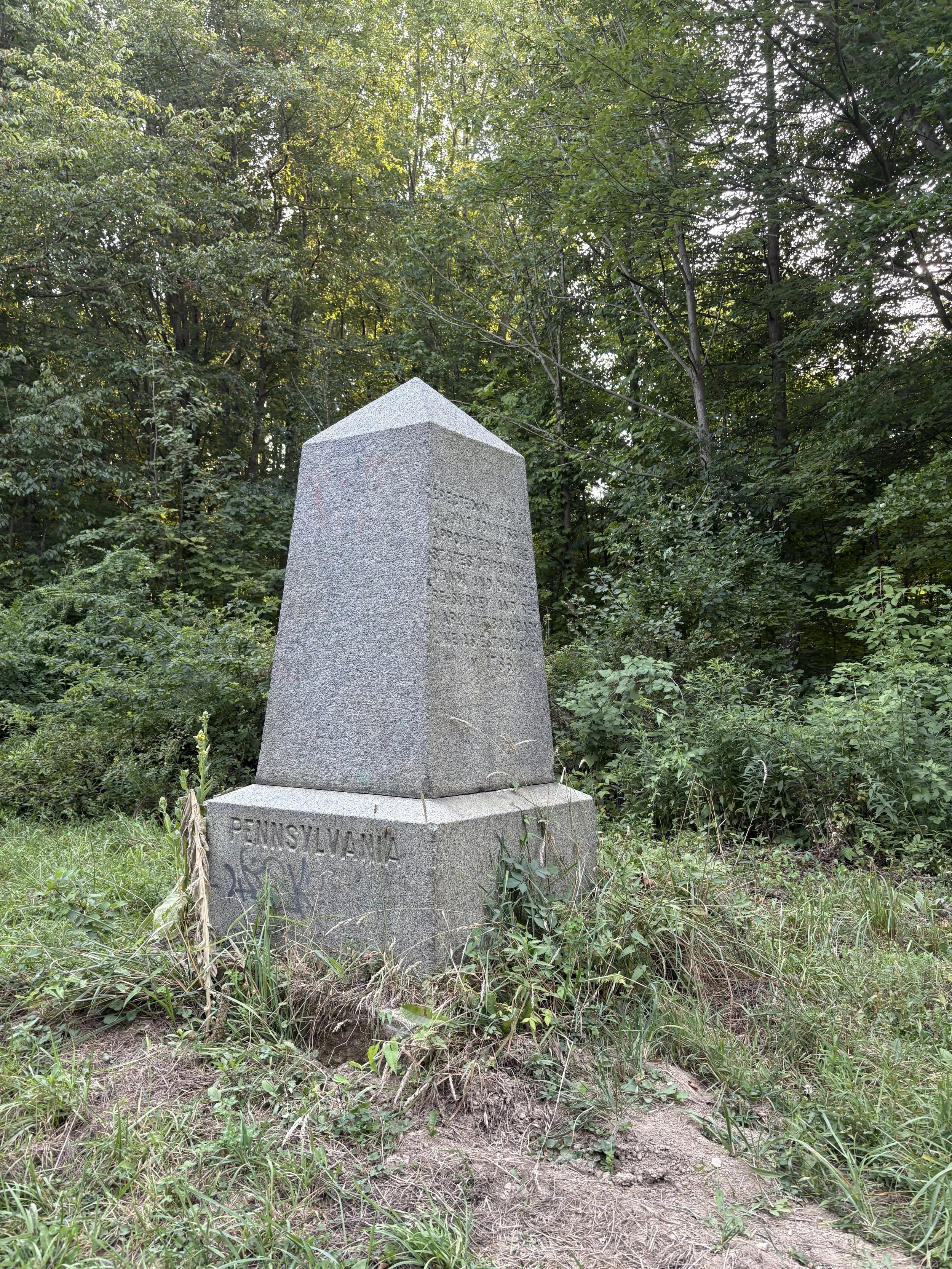
PA-OH Border Marker, State Line Road, Erie County
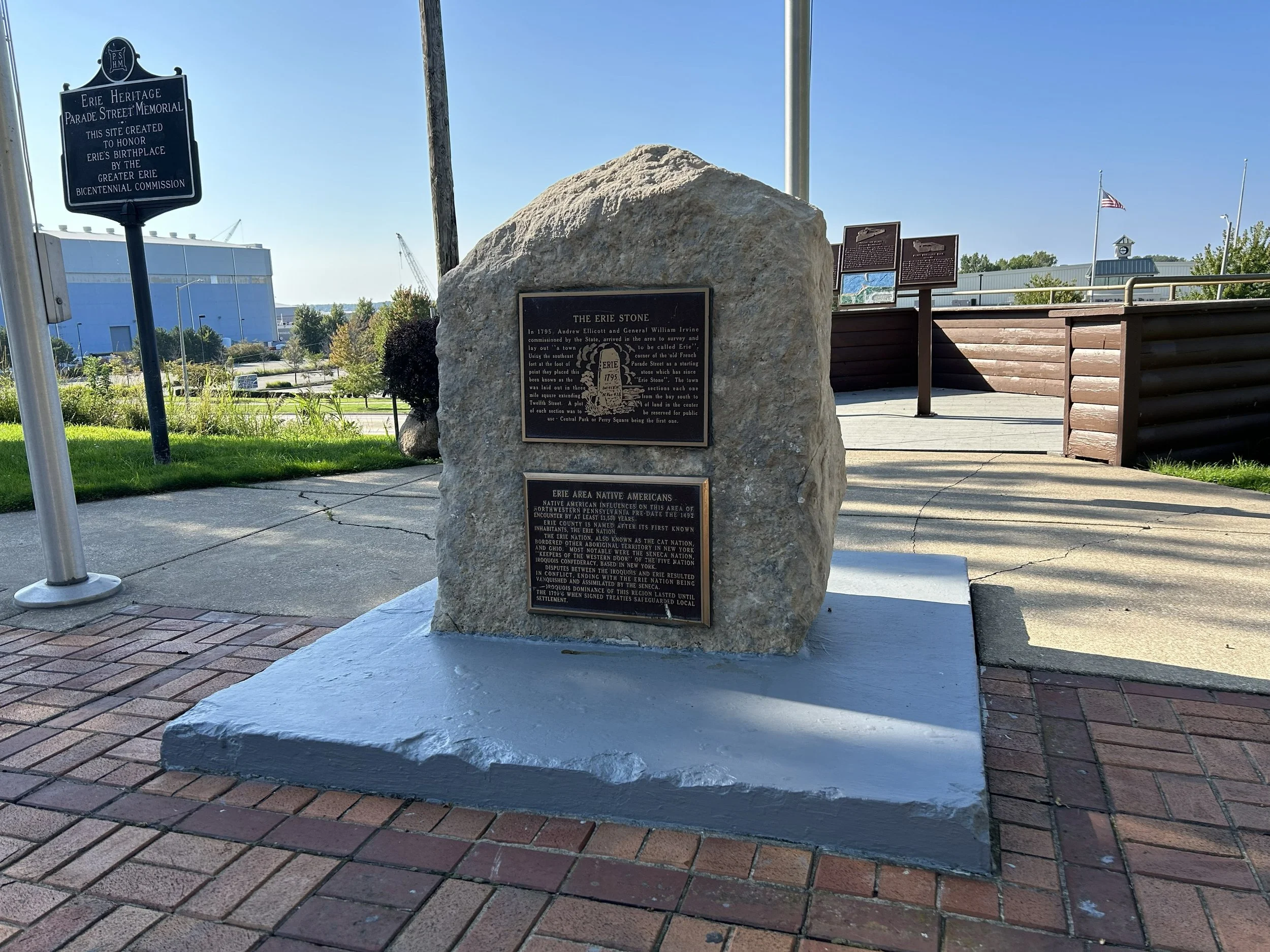
Erie Stone, Parade St, Erie
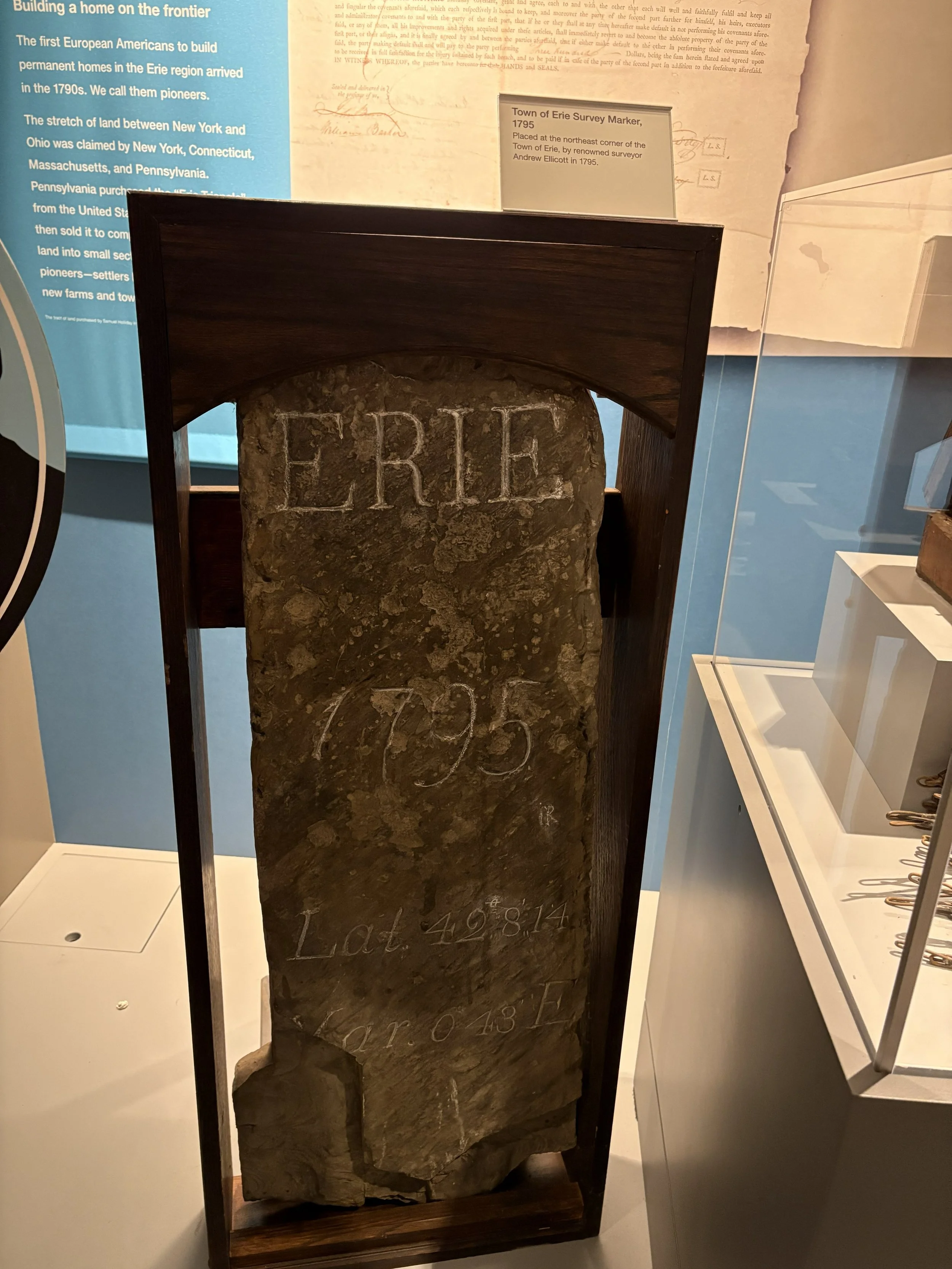
Erie Survey Marker, 1795, Hagen History Center
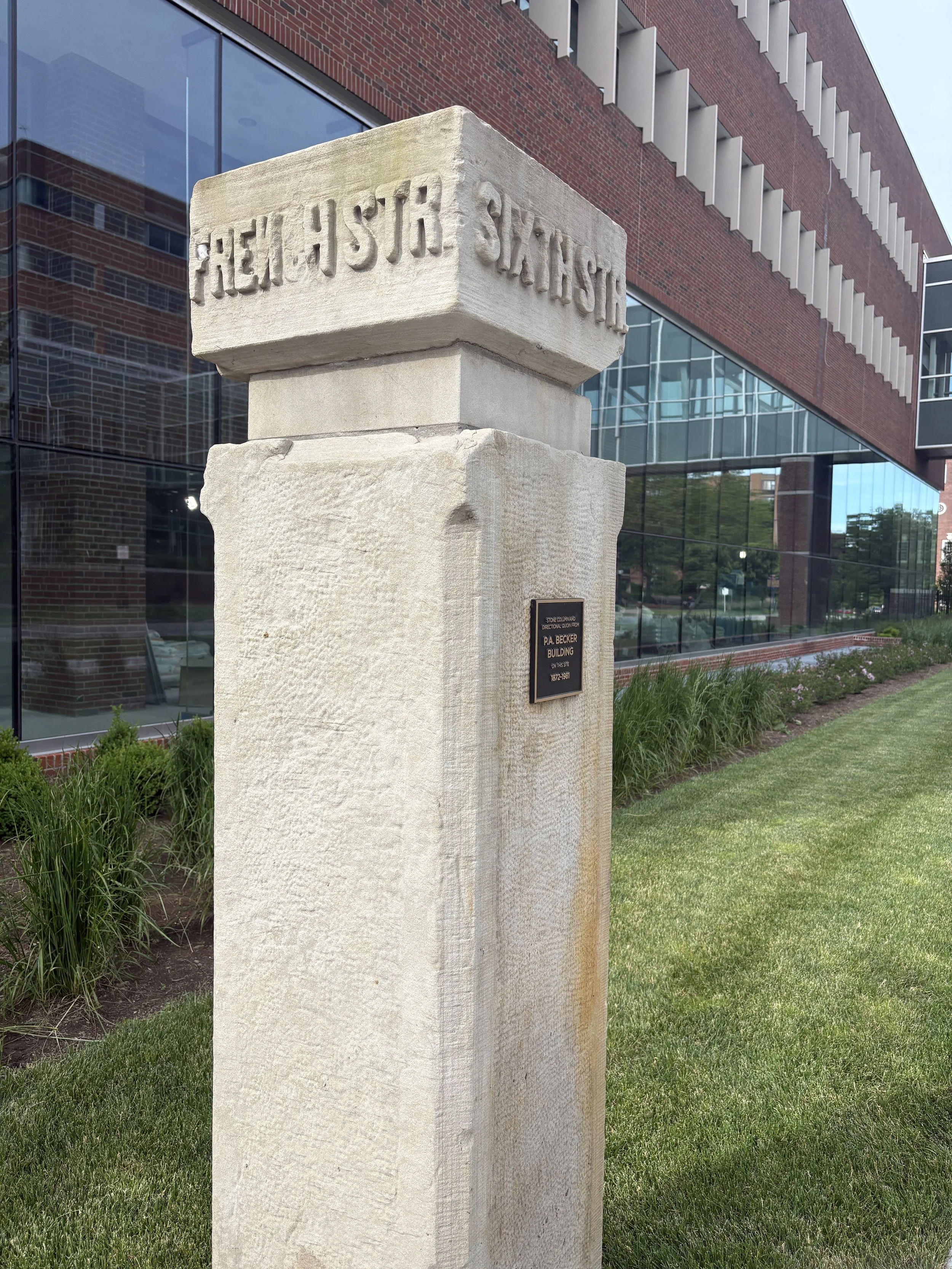
6th and French, Erie
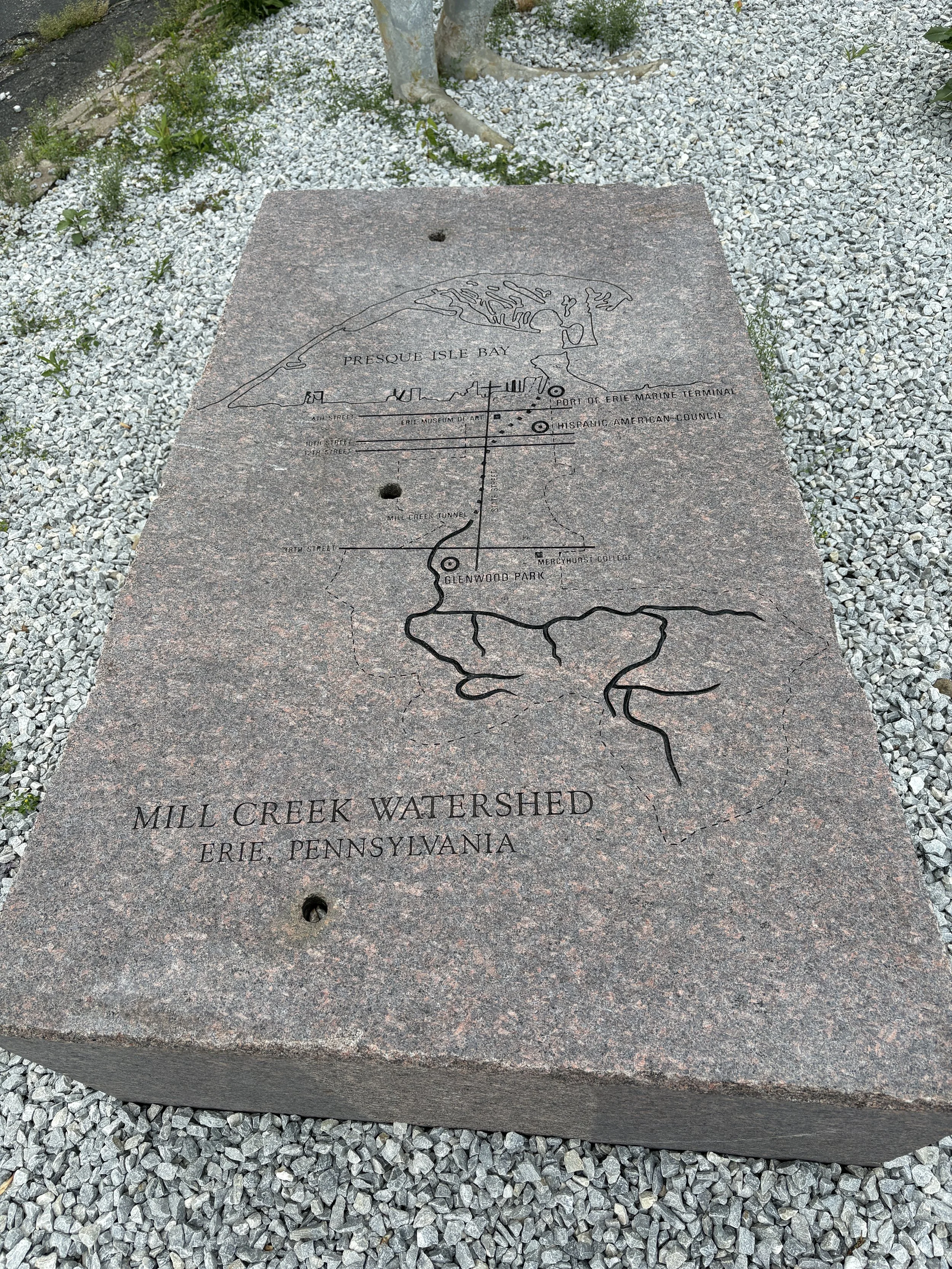
MCRC, 554 E 10th St
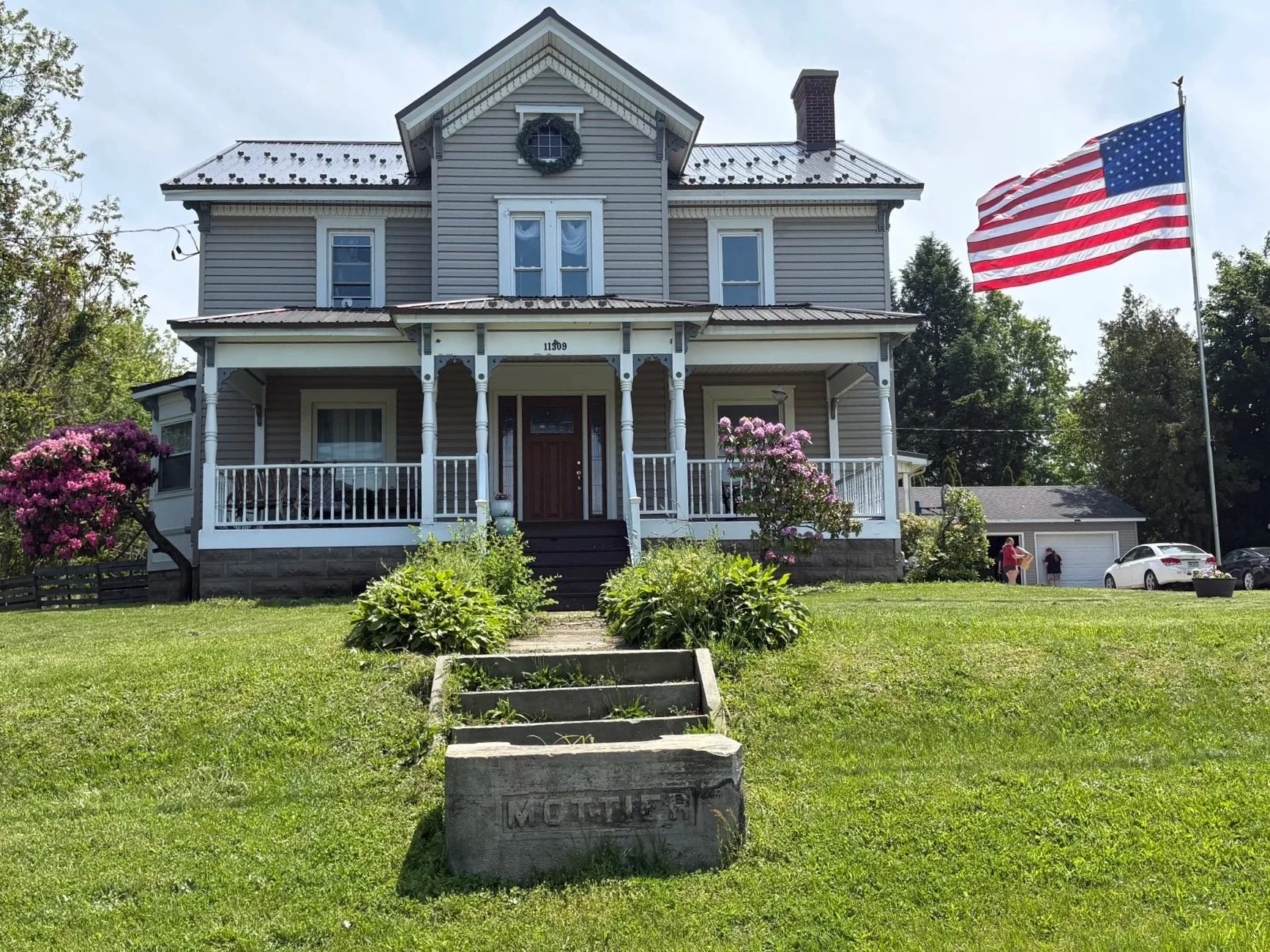
“Mottier” Stone, Private Residence, Middle Road, North East
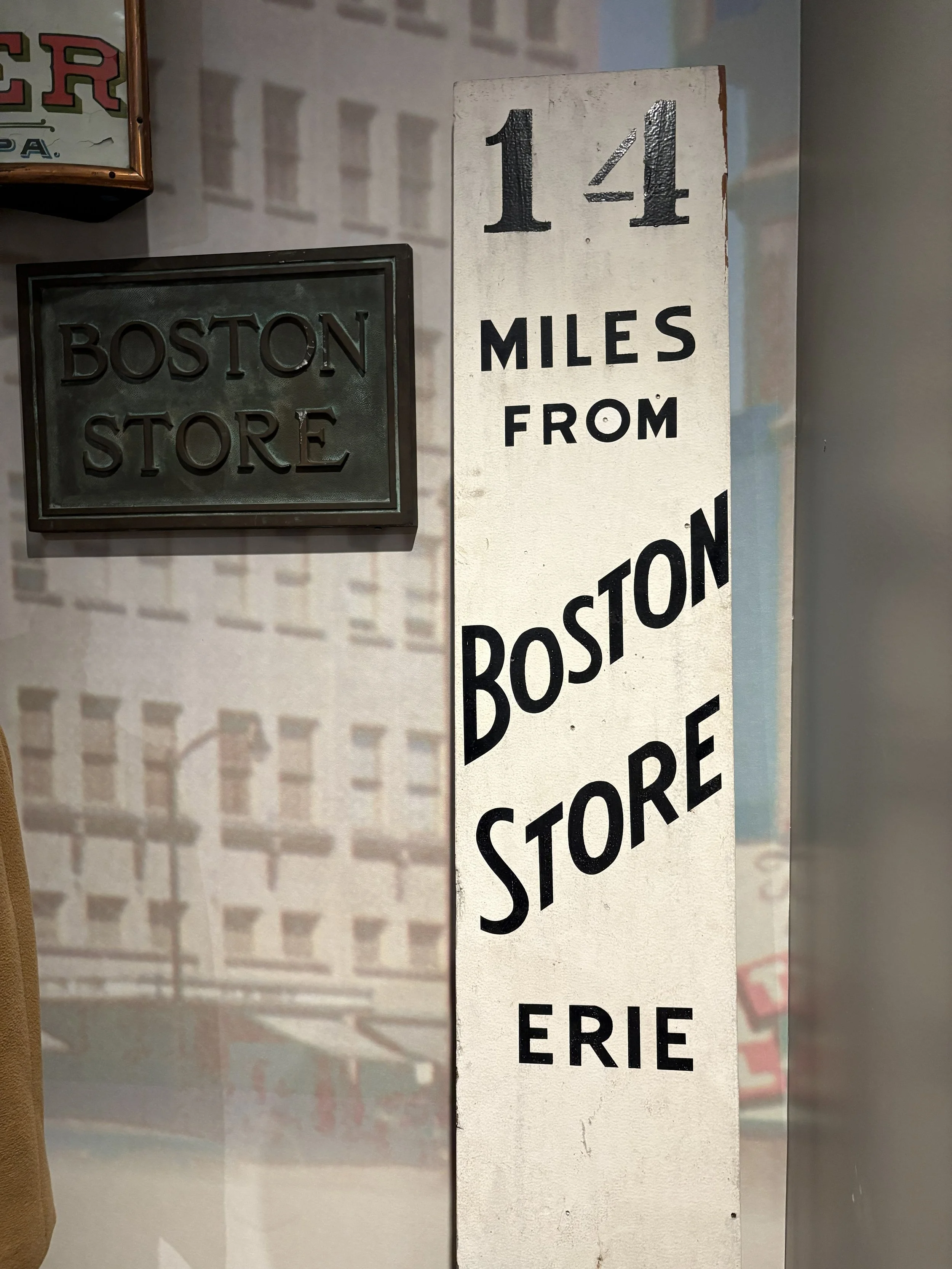
Boston Store Sign, Hagen History Center
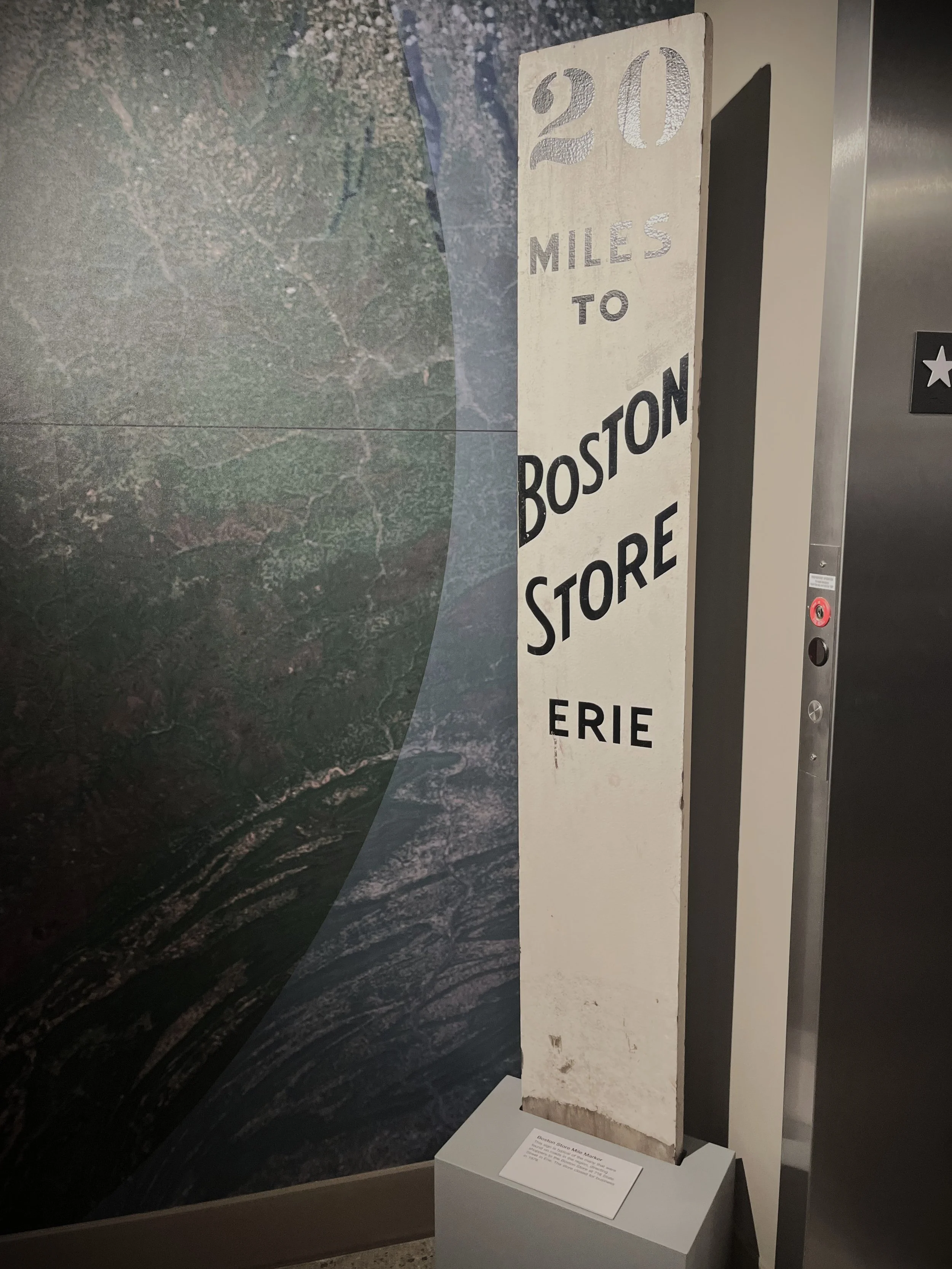
Boston Store Sign, Hagen History Center
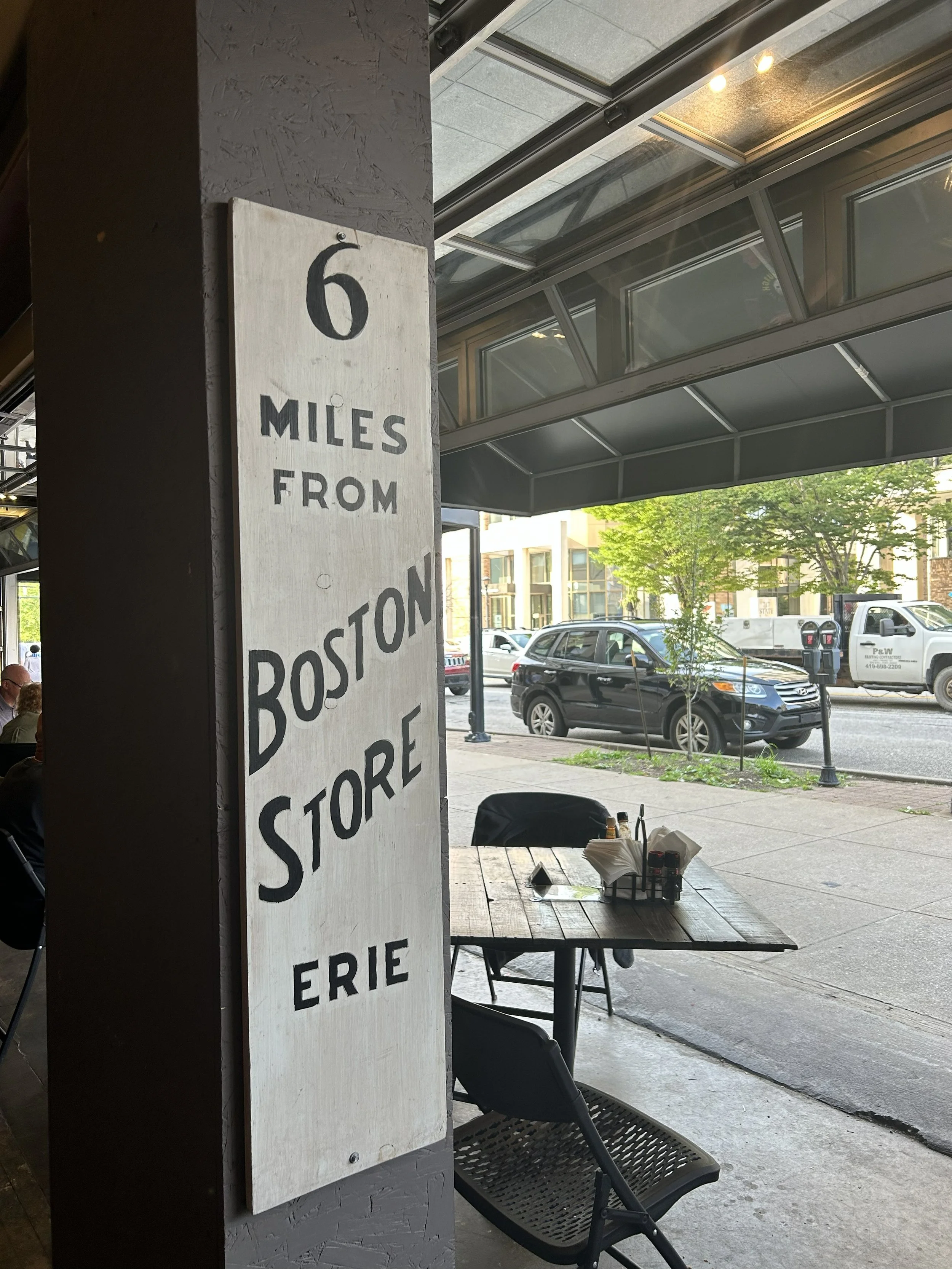
Boston Store Sign, Voodoo Brewery, State St, Downtown Erie