Hidden History
Beneath the surface of Erie’s familiar streets and quiet corners lies a hidden archive of stories long forgotten. This is your guide to the overlooked relics and whispered echoes of history scattered across the landscape—those rusted plaques, faded foundations, and silent monuments we pass daily without a second glance. This project uncovers the secrets etched into Erie’s soil, inviting you to see your surroundings not just as scenery, but as a living museum of mystery and memory.
Tunnel Beneath Union Station
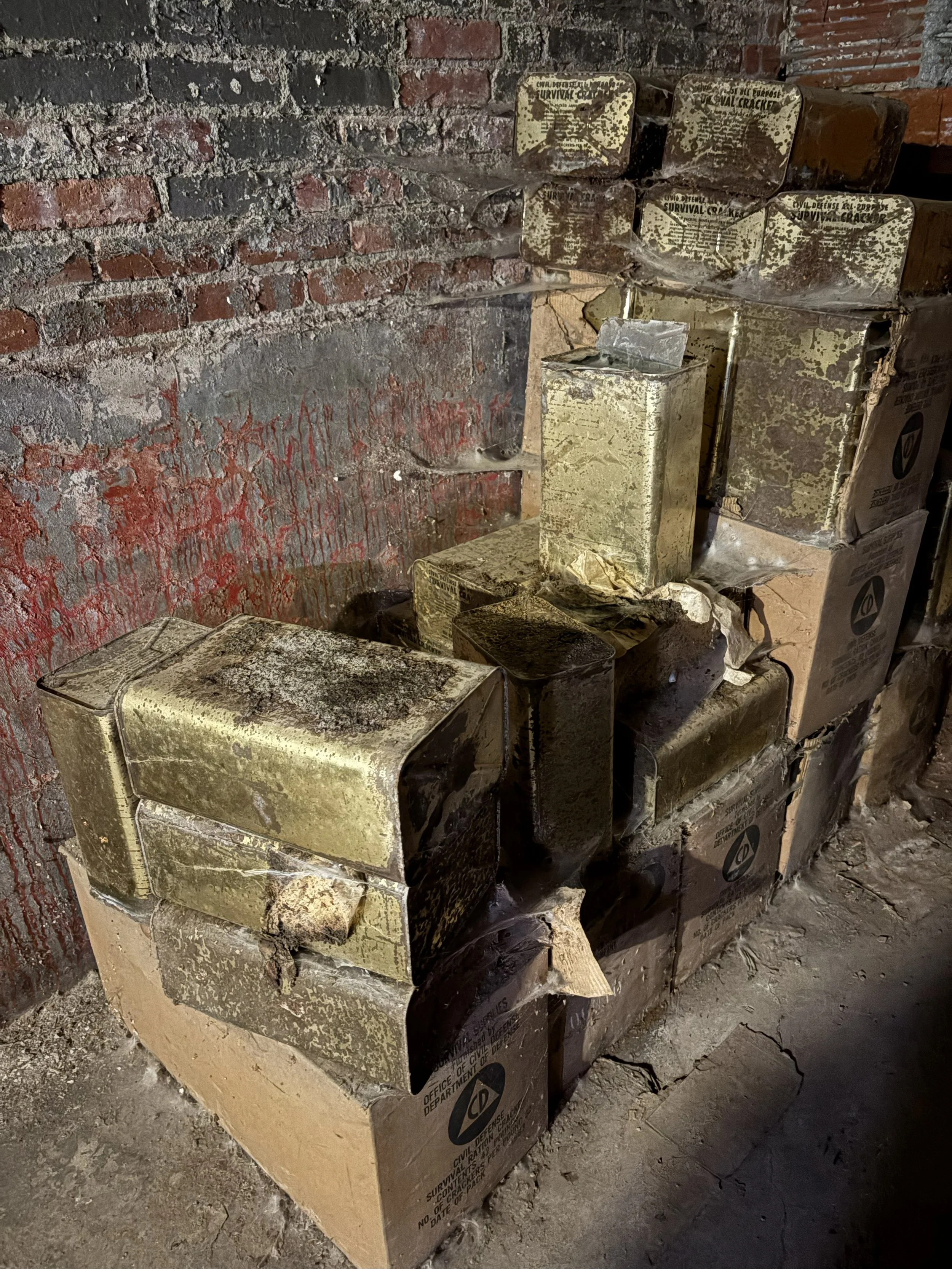
Beneath Erie’s Union Station lies a tunnel that once carried mail and freight to the Post Office, a hidden artery of industry now repurposed for haunted history tours. The air is damp, heavy with the scent of rust and standing water. Old civil defense survival crackers crumble in their boxes, travel trunks sag with forgotten journeys, and a warped photograph of a wagon leans in the corner, its image blurred by decades of dust. A single handprint smears across the wall, as if someone reached out in desperation before vanishing. Bare bulbs dangle overhead, their glow weak and flickering, casting long shadows that ripple across the puddled floor.
Union Station itself, built in 1927, has always been a crossroads of stories—some living, some spectral. Paranormal investigators and tour guides whisper of Clara, the little girl said to have fallen on the station’s staircase while boarding a train with her father. Her spirit is believed to linger, tugging at ankles and tripping visitors as if replaying her final stumble. Others report phantom phone calls echoing through the rotunda, pages that ring from nowhere, and voices that dissolve into static like nails on a chalkboard.
In the tunnel, the legends deepen. Guests claim to hear footsteps sloshing through the water when no one is there, or the faint rattle of trunks shifting as if unseen travelers are still moving their cargo. Some swear they’ve seen lantern light bobbing in the distance, only to find the corridor empty. The Brewerie at Union Station now offers tours of this subterranean passage, inviting the curious to walk where ghosts are said to wander.
It’s more than a tour—it’s a descent into Erie’s hidden underworld, where history and haunting blur. The tunnel beneath Union Station is not just a relic; it’s a reminder that some journeys never end.
Old Glenwood Park Ave
Walk it today and you’ll think it’s just a trail—quiet, leafy, lovingly maintained by neighbors who trim back the brush and keep the path clear. But beneath your feet lies the ghost of a road: Old Glenwood Park Avenue.
Once, it carried cars across Mill Creek, a ribbon of asphalt threading through Erie’s wooded heart. Then it was closed, swallowed by time and rerouted progress. What remains is a trail with secrets layered into its soil.
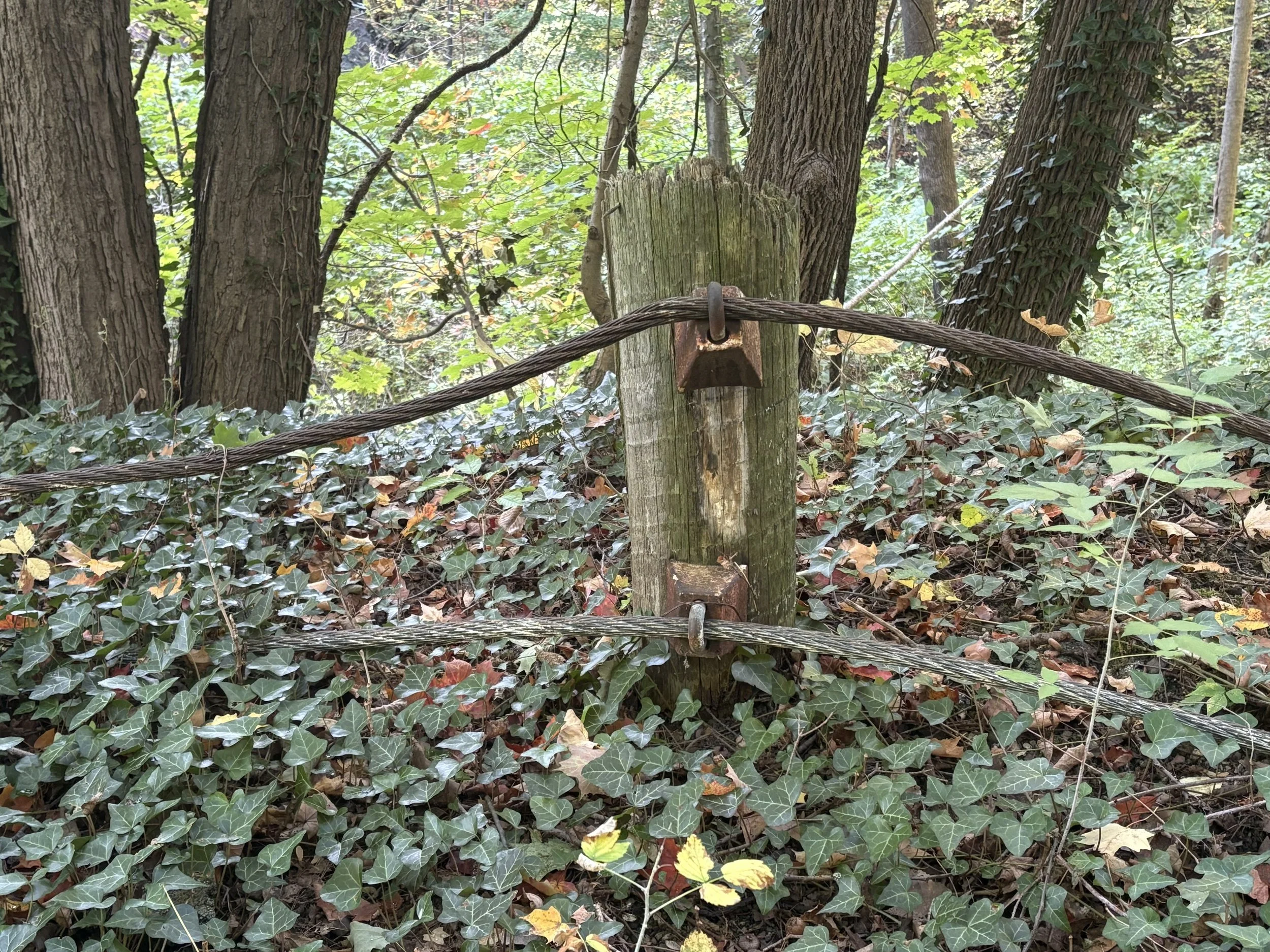
At certain bends, the past peeks through. You can see the strata of the old road, cracked and weathered, like a fossilized artery. A fragment of the highway’s cable barrier still juts from the earth, a rusted relic that once kept travelers safe—and now looks more like a skeletal rib cage rising from the ground.
And then there’s the art. Spray-painted phantoms, crooked faces, and cryptic symbols bloom along the concrete remnants. Some are playful, some unsettling, all of them ghostly graffiti that seem to wink at passersby. It’s as if the trail itself has invited artists to leave behind messages from another world—half joke, half warning.
It’s lovely here, yes. Birds call, the creek murmurs, and the canopy dapples the light. But linger too long and the atmosphere shifts. The trail hums with memory. Every step feels like trespassing on a forgotten passage, where asphalt, street art, and ghost stories intertwine.
Most walkers don’t notice. They pass through, unaware of the hidden history all around them. But Weird Erie knows: this is no ordinary trail. It’s a road that refuses to vanish, a place where the living and the uncanny leave their marks side by side.
Transcontinental Phone Line
Girard
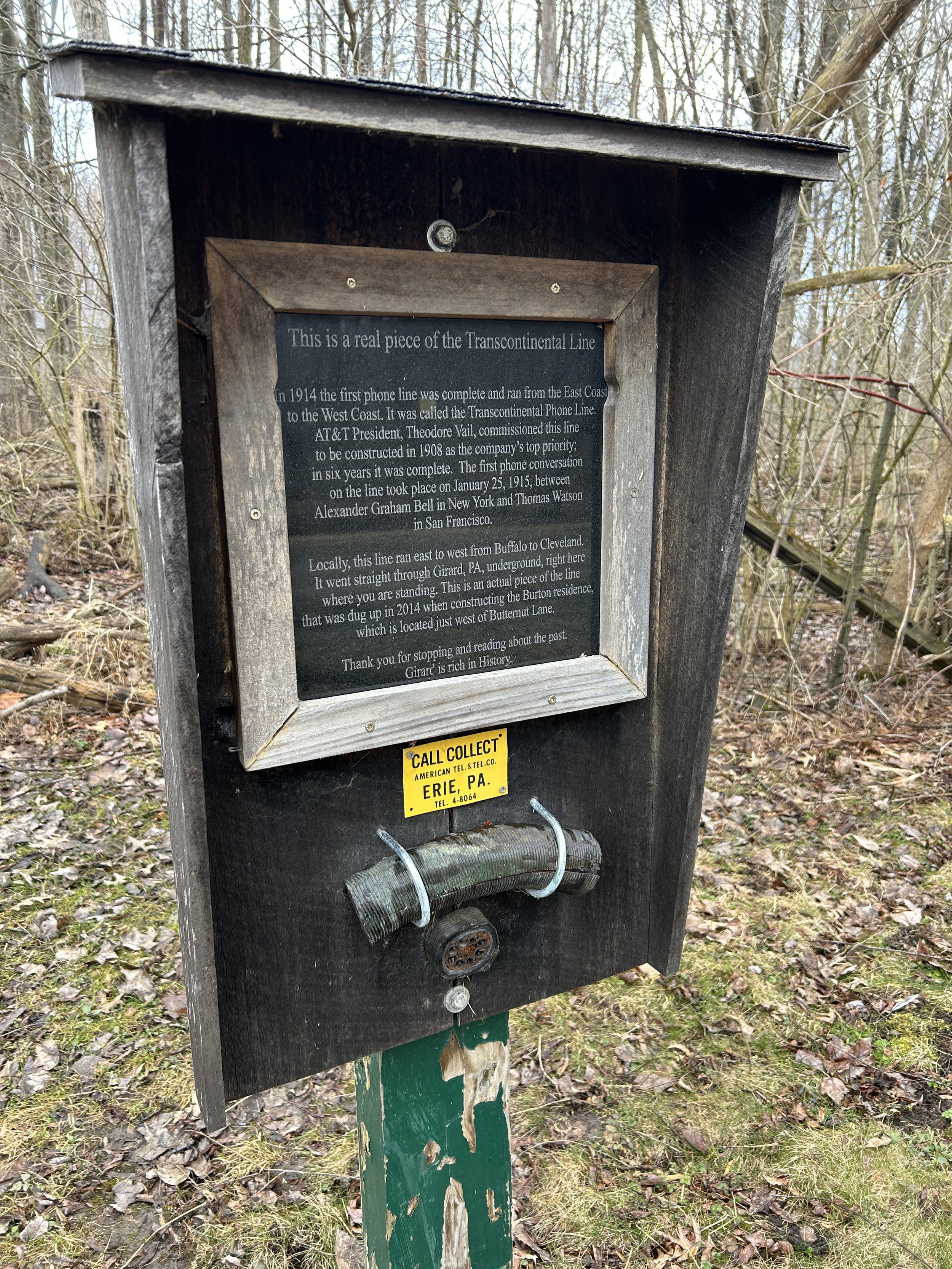
In 1914, the first transcontinental telephone line revolutionized communication in America—stretching from New York to San Francisco and linking the nation coast to coast by voice for the very first time. Locally, the line ran east to west from Buffalo to Cleveland, passing directly through Girard, Pennsylvania. This invisible artery of copper and innovation brought Erie County into the fold of a rapidly modernizing country, shrinking distances and connecting communities in ways previously unimaginable.
A tangible piece of this history resurfaced in 2014 during construction of the Burton Residence on Butternut Lane in Girard. Workers unearthed a segment of the original line—weathered but intact—and it now rests on display at the very spot it was discovered. This modest artifact serves as a quiet monument to Erie County’s role in a national milestone, reminding visitors that beneath the soil of small towns lie the buried threads of progress, stitched into the story of how America learned to speak across its vast expanse.
Lustron Houses
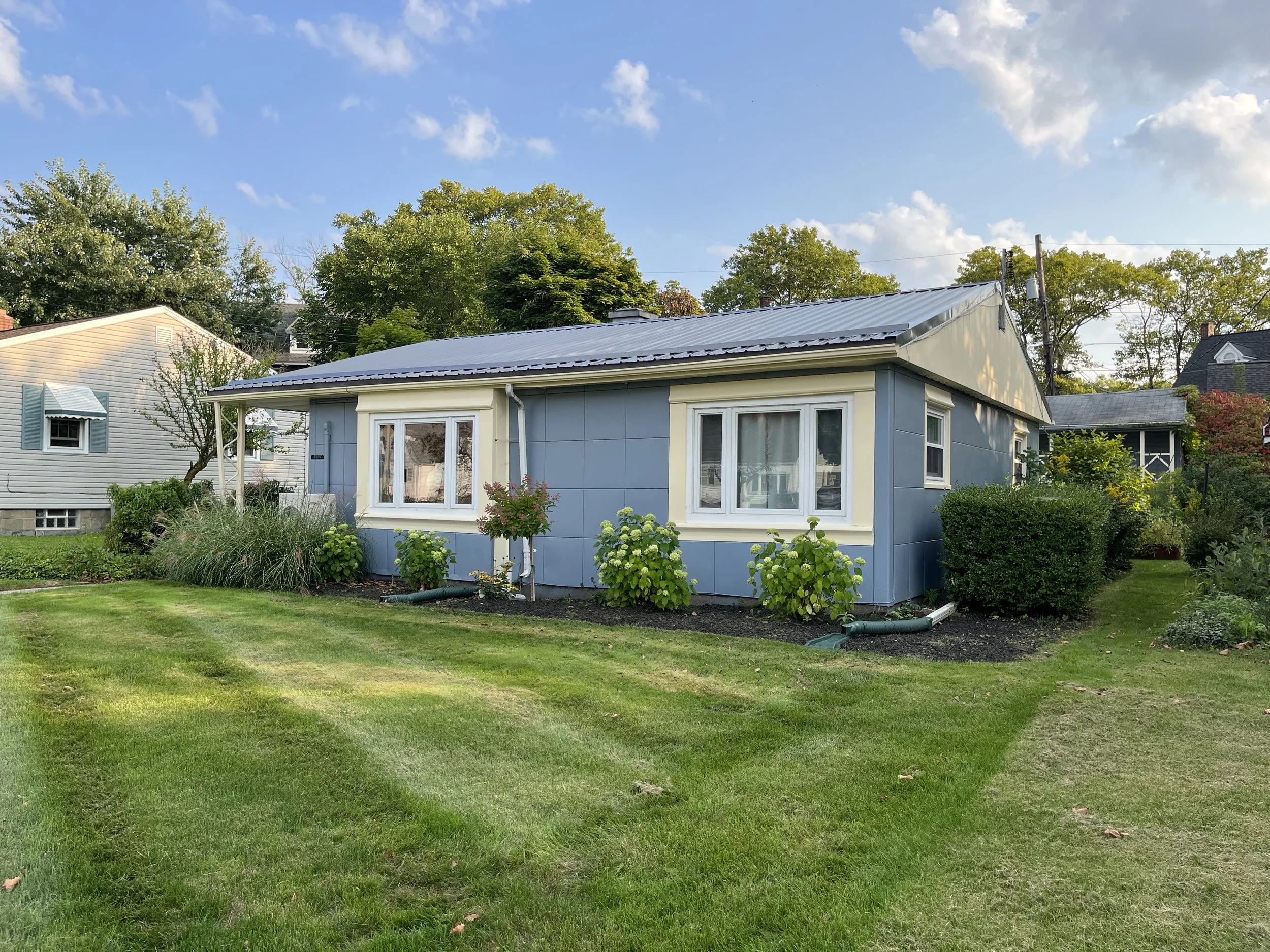
Tucked quietly throughout the city are rare architectural gems from America’s postwar past: Lustron houses. These sleek, steel-framed homes were born out of a bold experiment in the late 1940s, when the Lustron Corporation set out to solve the housing crisis with factory-built efficiency and futuristic flair. Manufactured between 1948 and 1950, Lustron houses were made entirely of porcelain-enameled steel panels—walls, roof, even built-in cabinetry. Their clean lines and minimalist design stood in stark contrast to the wood-framed homes of the era, offering a vision of domestic life that was modern, durable, and virtually maintenance-free.
Only about 2,500 Lustron homes were ever produced, and fewer than half survive today. The one in Lawrence Park is a quiet testament to mid-century optimism, nestled among more traditional homes like a time capsule from the Atomic Age. But living in a Lustron comes with its quirks. Instead of ductwork, these homes used radiant ceiling heating, warming rooms from above like a gentle sunbeam. Plumbing and electrical systems were tucked into steel channels behind the walls, making repairs a bit of a puzzle for modern contractors. And because you can’t hammer nails into steel, decorating requires a little creativity—magnets are the go-to solution for hanging art and photos.
Though small in number, Lustron homes continue to fascinate architects, historians, and anyone drawn to the charm of retro innovation. They’re reminders of a moment when America dreamed big, built bold, and imagined a future where even your house could be made of gleaming steel.
Erie Extension Canal
PA18 at Platea
Along PA Route 18 in Platea, just behind the Erie Extension Canal historical marker, lies the quiet remains of this once-mighty transportation artery.
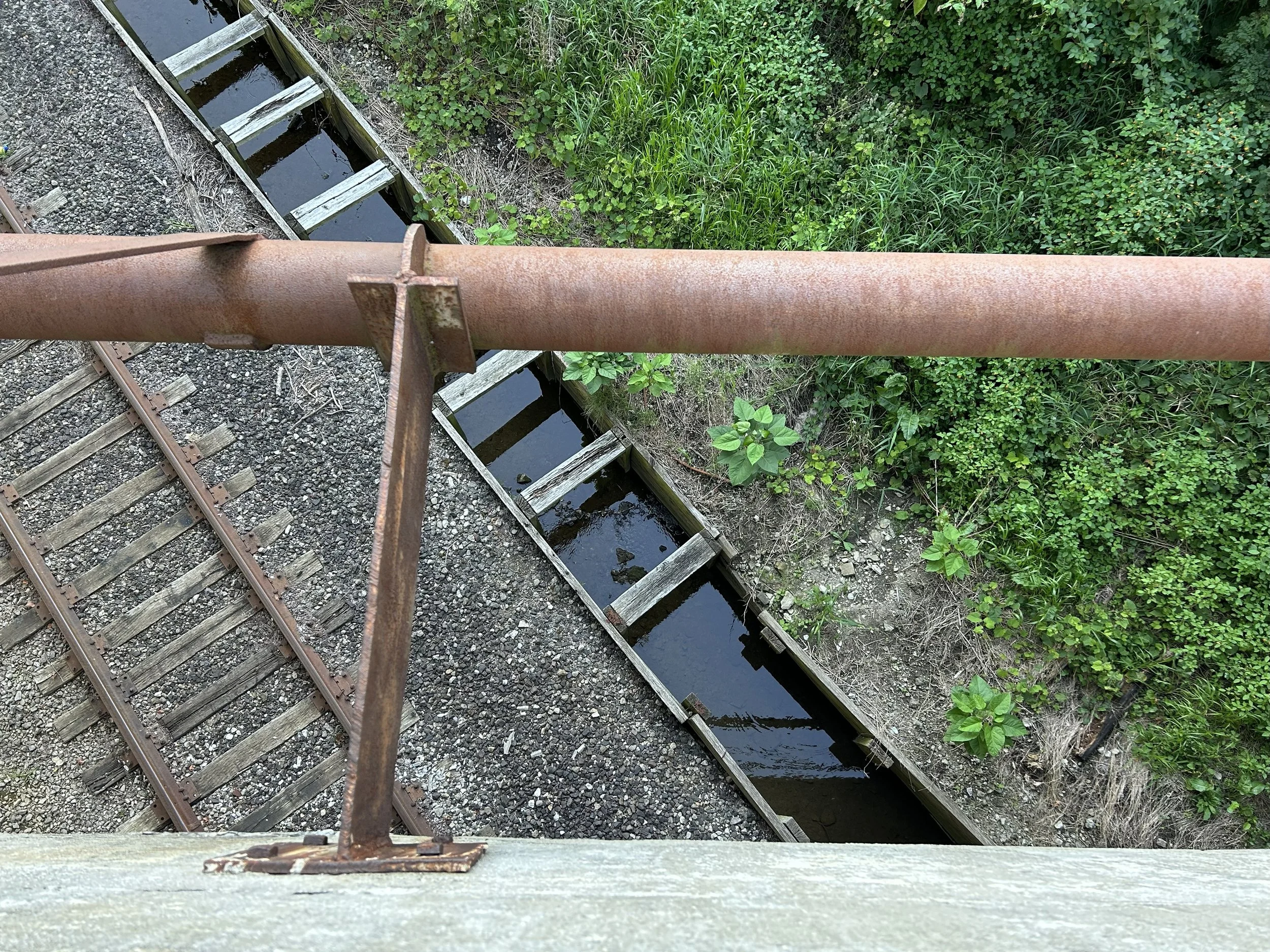
This stretch of canal, completed in 1844, was part of a 136-mile system connecting Pittsburgh to Lake Erie, and it played a vital role in Erie County’s early industrial development. Platea, originally known as Lockport, was founded at the site of a dramatic engineering feat: 28 locks in just two miles, designed to lower boats bound for Erie. Though the canal was abandoned in 1871 and eventually replaced by railroad lines, traces of its channel still ripple through the landscape. The photos taken at this site capture the subtle contours and overgrown banks that once guided barges through northwestern Pennsylvania—offering a glimpse into the region’s layered past and the quiet persistence of history beneath our feet.
Oldest Surviving House
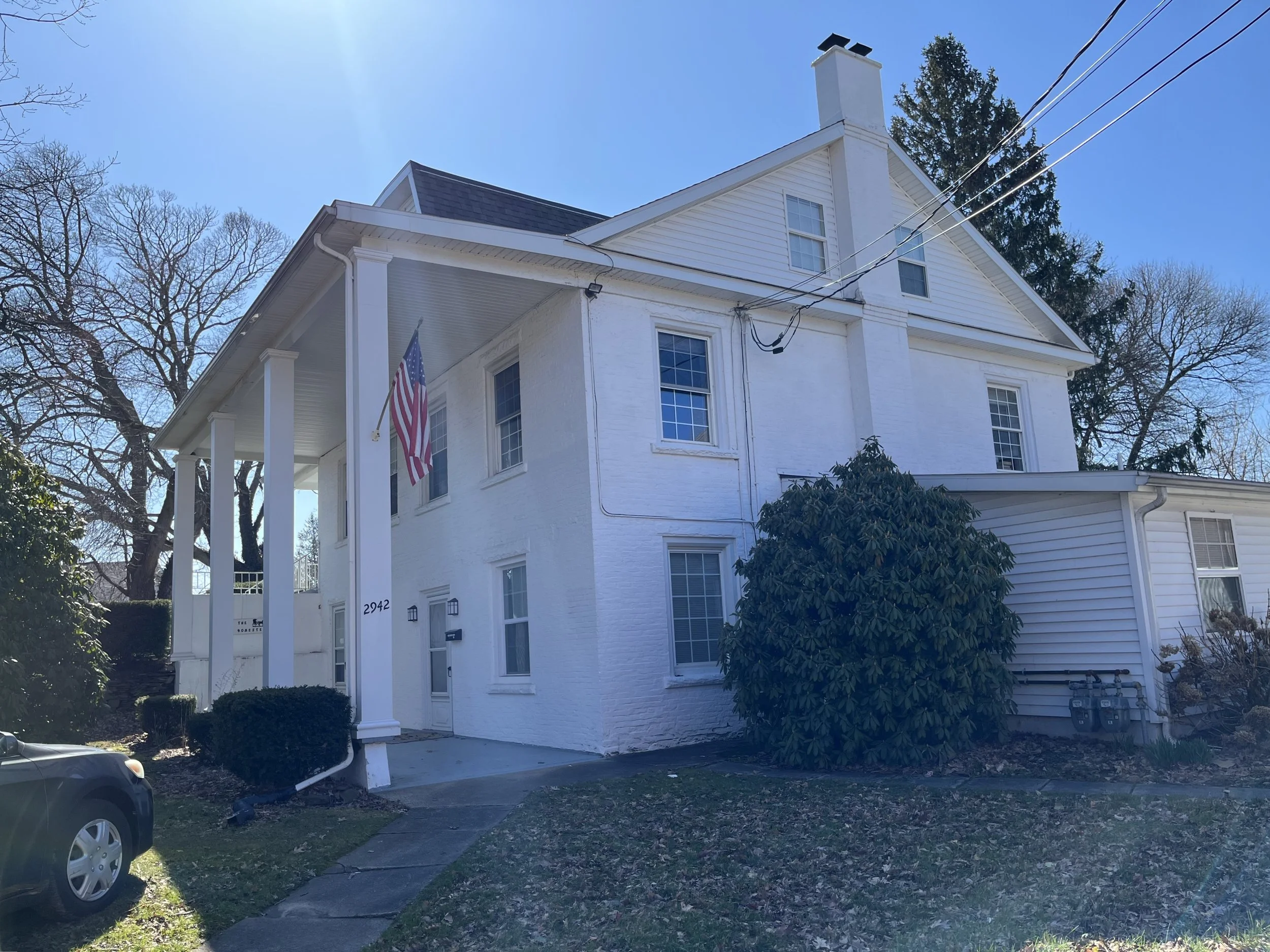
Built in 1801 by Continental Army veteran and Erie County judge John Cochran, 2942 Myrtle Street—known historically as The Homestead—is widely considered the oldest surviving house in Erie.
Perched near the north bank of Mill Creek, the home originally overlooked a valley once called “Happy Valley,” where Cochran operated a sawmill, grist mill, and other early industries that helped shape the region’s development. The house itself is a striking example of early Greek Revival architecture, with its white-painted brick exterior and stately two-story columns. Over the centuries, it evolved from a single-family residence into a two-unit dwelling, and even hosted President Zachary Taylor’s welcoming committee during his 1849 visit to Erie. After falling into disrepair, the property was donated to Community Shelter Services in 2017, which undertook a major restoration to preserve its historic character while transforming it into permanent housing for families in need. Today, The Homestead stands not only as a physical link to Erie’s founding era, but as a symbol of resilience and adaptive reuse in the heart of the city.
SS THOMAS JEFFERSON FLAGSHIP DRIVESHAFT
Peach Street near West 6th St
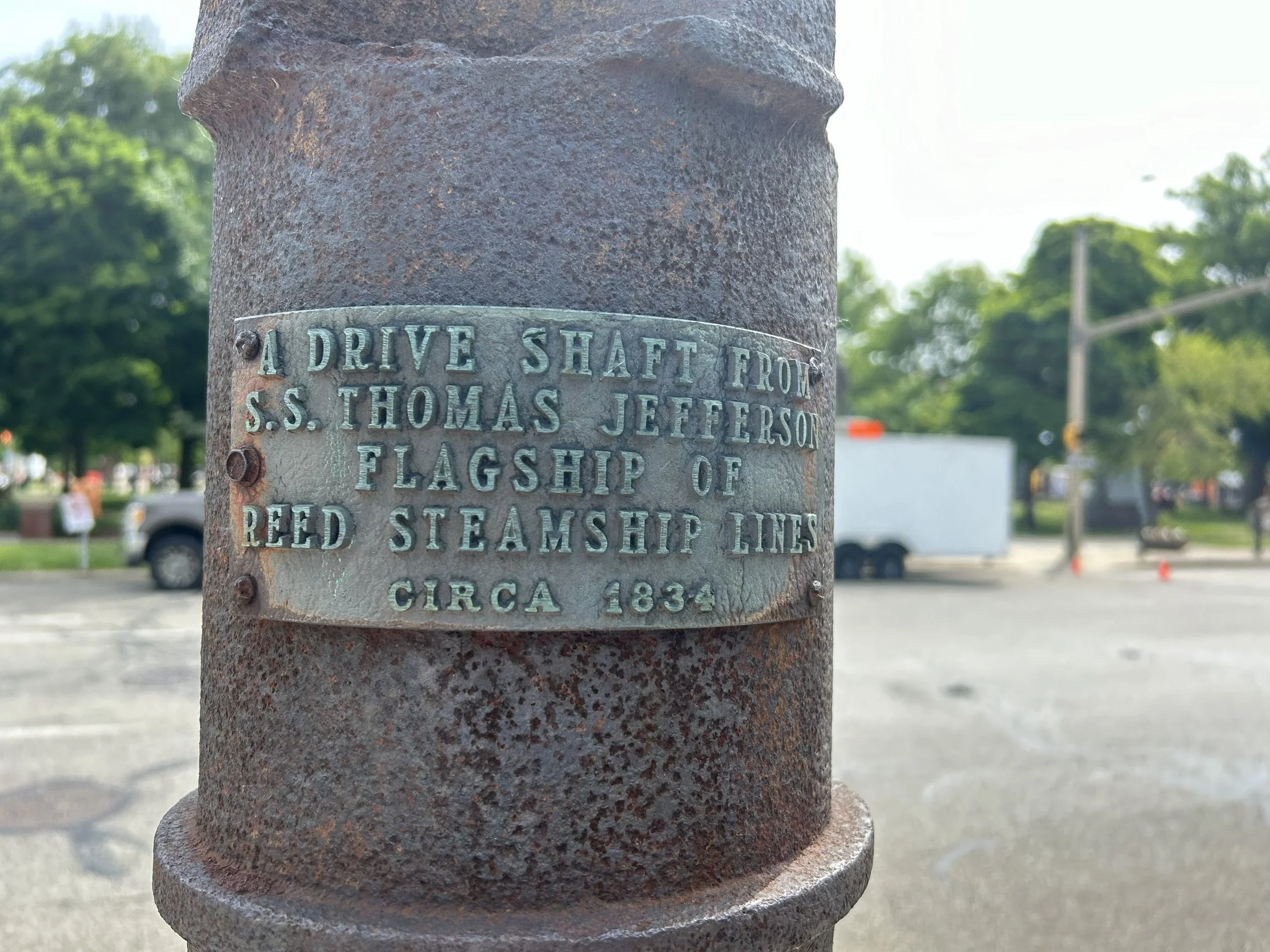
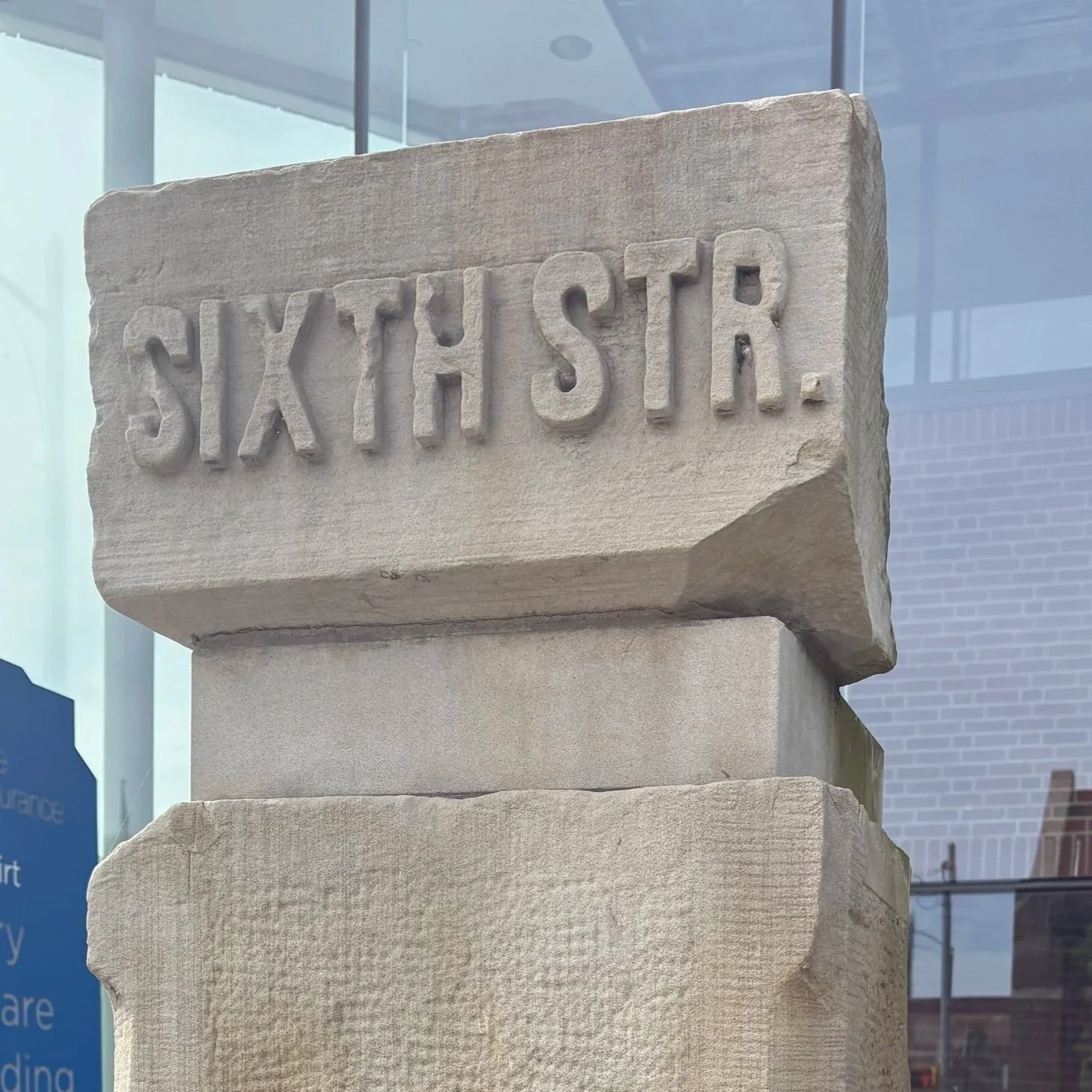
In 1834, the propeller shaft from the S.S. Thomas Jefferson was installed to protect Sarah Reed’s tree from passing buggies. The S.S. Thomas Jefferson was a 19th-century flagship of the Reed Steamer Liners. It’s captain, Thomas Wilkins, lived between the Reed Residence and the courthouse. The drive shaft appears in depictions of the period, including the below postcard.
Witness to the Erie Flood
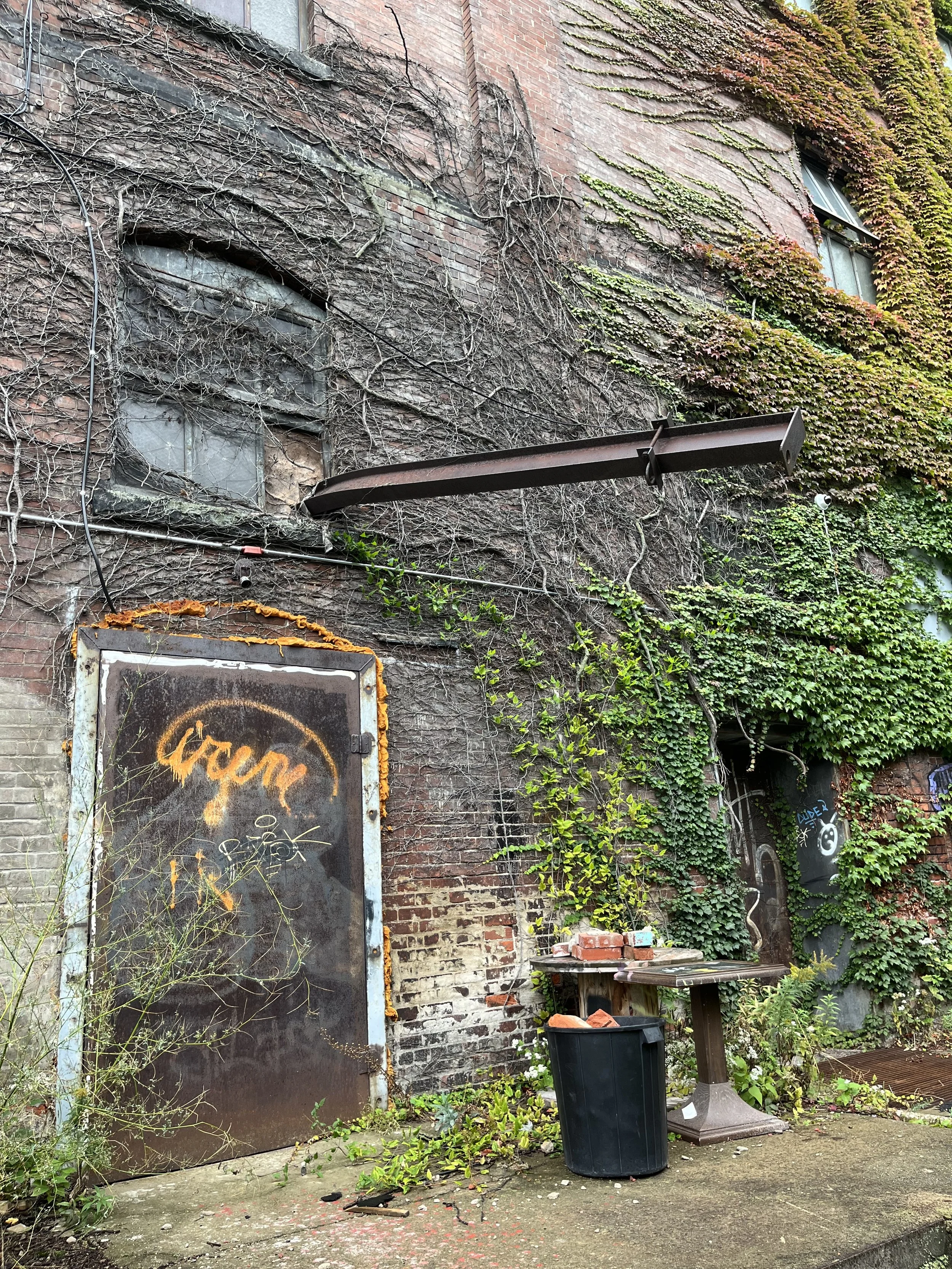
Behind the PACA building in Erie, PA stands a rusted, twisted girder beam—one of the few surviving physical remnants of the catastrophic Mill Creek Flood of 1915.
On August 3rd of that year, a tropical system collided with a Great Lakes low-pressure front, unleashing 5.77 inches of rain in just a few hours over the Mill Creek watershed. The city’s culverts and bridges were overwhelmed, and when the northern culvert buckled, a wall of water surged through downtown Erie, destroying over 400 buildings and claiming nearly 30 lives. The flood was so intense it washed out railway tracks and reshaped entire neighborhoods.
The girder behind PACA (Performing Artists Collective Alliance), formerly part of the Mayer Building’s industrial infrastructure, was bent by the force of floodwaters that tore through the area. It had once supported cargo operations along Mill Creek, but now it stands as a silent witness to Erie’s most devastating natural disaster. Preserved in place, the beam is a haunting artifact—its warped metal a testament to the sheer power of nature and the fragility of human engineering. For visitors and locals alike, it offers a visceral connection to a moment when Erie’s landscape was forever changed.
OLD HORSE TROUGH
Sassafras near 12th St
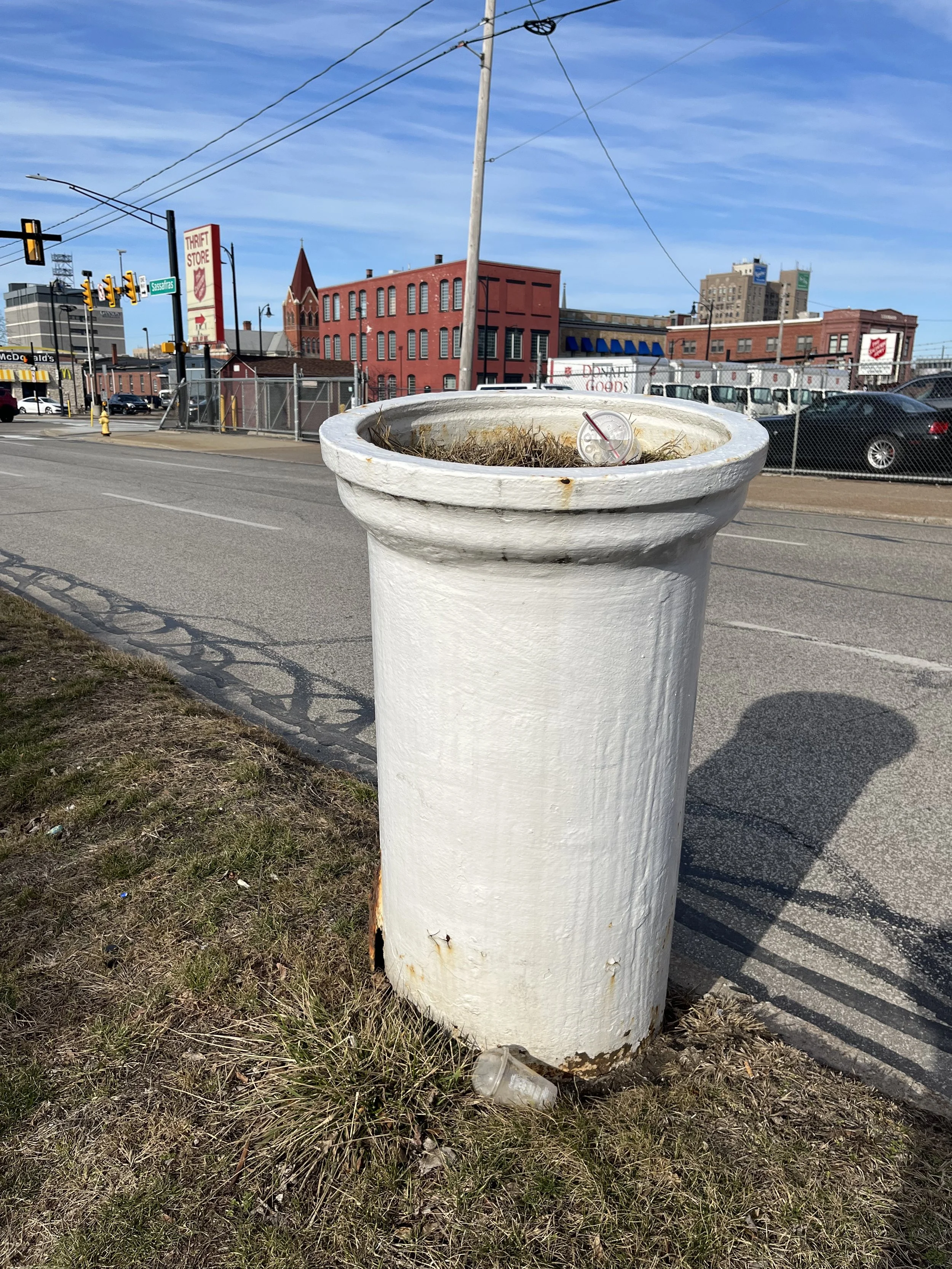
Just south of West 12th Street on Sassafras Street in Erie, PA, stands a quiet relic of the city’s horse-powered past: a white, cylindrical iron horse trough that once quenched the thirst of coal-hauling teams in the early 20th century.
Originally installed to serve the horses working for the Wittman-Pfeffer Coal Company, which operated on the site beginning in 1905, the trough is a rare survivor from an era when “horseless carriages” were still a novelty. Though it now holds dirt instead of water, the trough remains in its original location—preserved thanks to the insistence of the Times Publishing Company when they built the Erie Times-News building nearby in 1970. It’s more than just a piece of cast iron; it’s a marker of Erie’s transition from industrial horsepower to modern infrastructure. In 2002, it even played a starring role in the newspaper’s “Great Key Hunt,” when a $2,500 prize key was hidden inside. Today, the trough is easy to miss, but for those who know where to look, it’s a charming and unexpected window into the city’s working-class history.
Old Zoo Tunnel
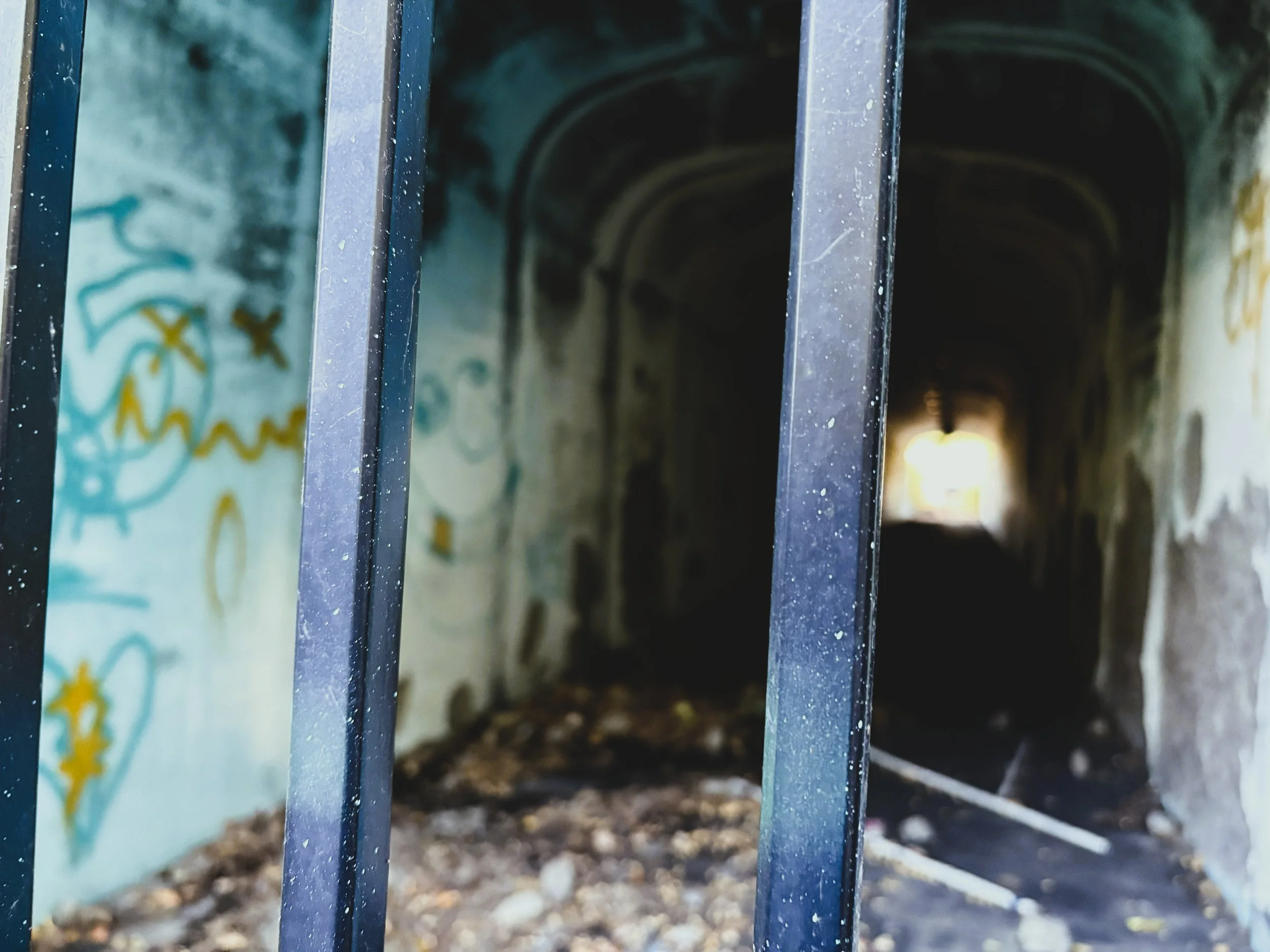
Beneath the hum of traffic on West 38th Street lies a secret most Erie residents have never heard of: a tunnel built decades ago, sealed and abandoned before it was ever used. Today, it sits closed in with wrought iron gates at both ends, a relic of ambition turned ghost story.
To reach it, there’s a sweeping paved walkway that winds through the woods—a path beautiful in its symmetry, eerie in its silence. The pavement leads you toward the tunnel like a forgotten invitation, but the way is barred. The tunnel itself is only accessible across public works property, so we don’t recommend anyone attempt to enter. Still, just knowing it’s there beneath your feet is enough to stir unease.
The Erie Zoo, originally named Glenwood Park Zoo in 1924, grew out of the Robert Evans estate and expanded rapidly in the 20th century. As part of those expansions, infrastructure like the 38th Street tunnel was envisioned to ease movement between the zoo and surrounding parkland. But the tunnel was forgotten, overshadowed by other projects and improvements. In 2020, it briefly reappeared in headlines when a fire damaged displays stored inside, including props from Zoo Boo and parade floats. After that, the gates were locked again, and the tunnel slipped back into obscurity.
Locals whisper that the tunnel hums with strange echoes. Some say you can hear dripping water and phantom footsteps even when the gates are sealed. Others claim to have seen lantern light flicker inside, though no one is permitted to enter. The wrought iron bars themselves feel like a warning: this place was meant to be forgotten.
It’s a lovely trail, yes—pavement winding through the woods, the creek nearby—but it’s also a reminder of Erie’s hidden layers. Roads that vanish, tunnels that lead nowhere, projects abandoned but never erased. The Glenwood Zoo tunnel is one of those places where history and mystery overlap, a ghost of civic planning that lingers beneath the city’s everyday life.
Ghost Signs
Erie’s Fading Echoes
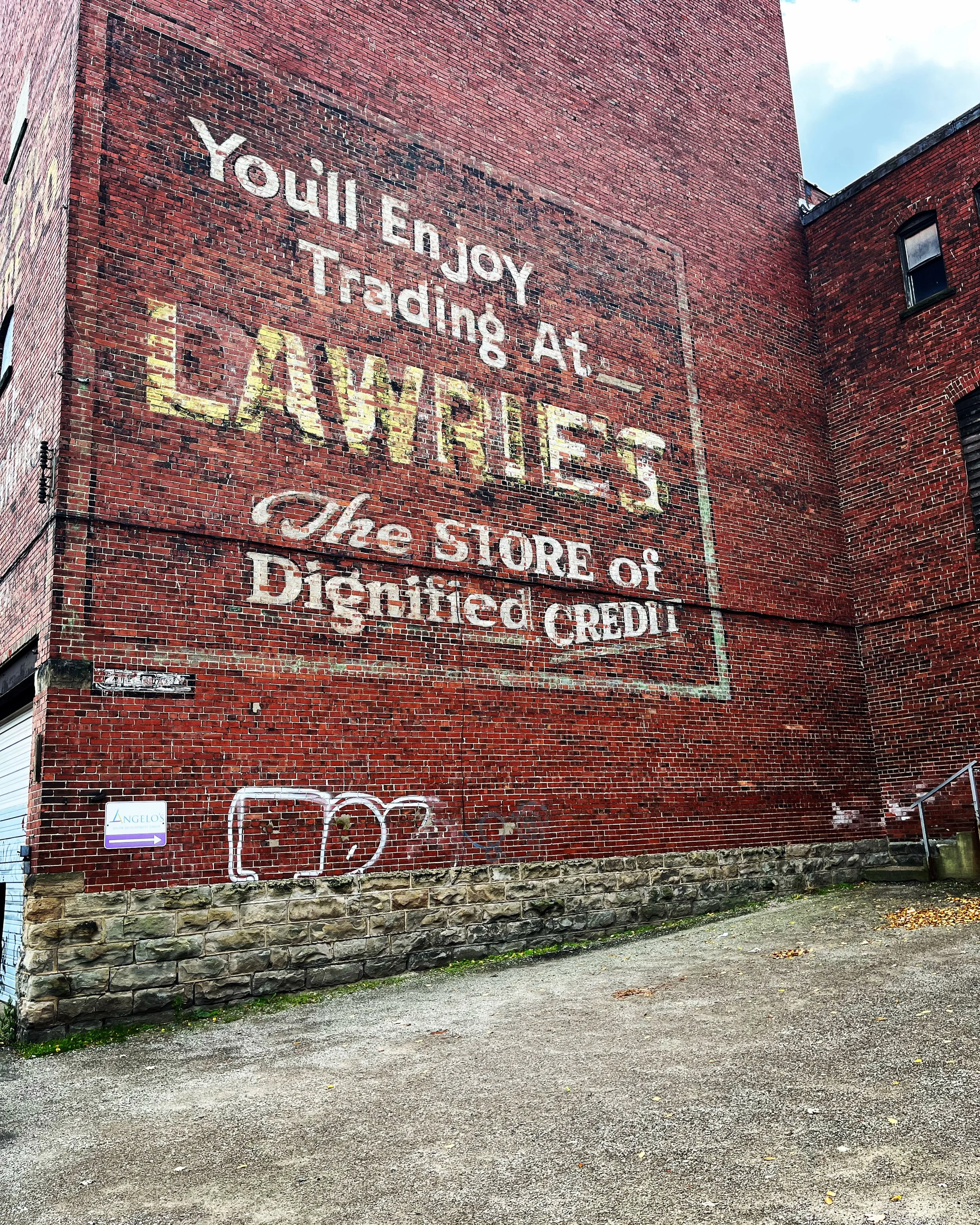
They cling to brick like memories—painted whispers of a city that once bustled with cigar shops, soda fountains, and five-cent promises. Erie’s ghost signs are fading advertisements from another era, still visible on aging facades and alley walls. Some are bold and legible, others barely a breath of pigment. But each one is a relic, a reminder that commerce once had a poetic side, and that even marketing can haunt. This section showcases the signs that time forgot but the walls remembered—layered, weathered, and weirdly beautiful. Keep your eyes peeled… the past is still selling something.
Weschler Ave Sign
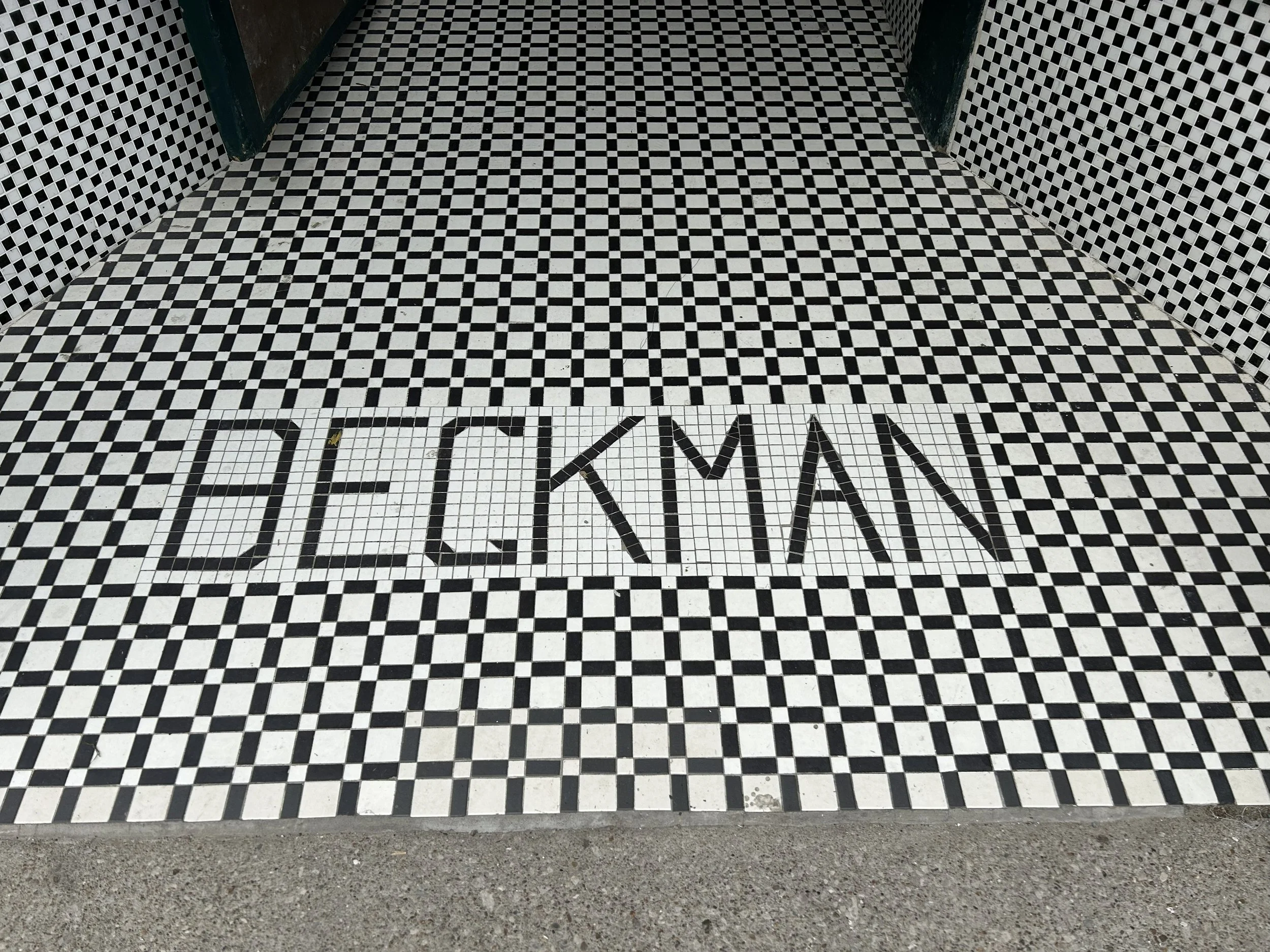
Embedded in the pavement along Weschler Avenue in Erie is a charming remnant of the city’s early infrastructure—a tile street sign that quietly anchors the neighborhood in time.
These ceramic street markers were once common throughout Erie, installed in the early 20th century as part of a citywide effort to modernize and beautify public spaces. Durable and decorative, the tile signs were set into sidewalks at intersections, offering a crisp, legible alternative to metal signage. Most have vanished due to roadwork, weather, and redevelopment, but the Weschler Avenue tile remains remarkably intact—a rare survivor that evokes the craftsmanship and civic pride of a bygone era. Framed by concrete and softened by age, it’s more than a label—it’s a subtle invitation to look down, slow down, and notice the layers of history beneath our feet.
Sidewalk Stamps
Beneath your boots, the past is pressed in concrete.
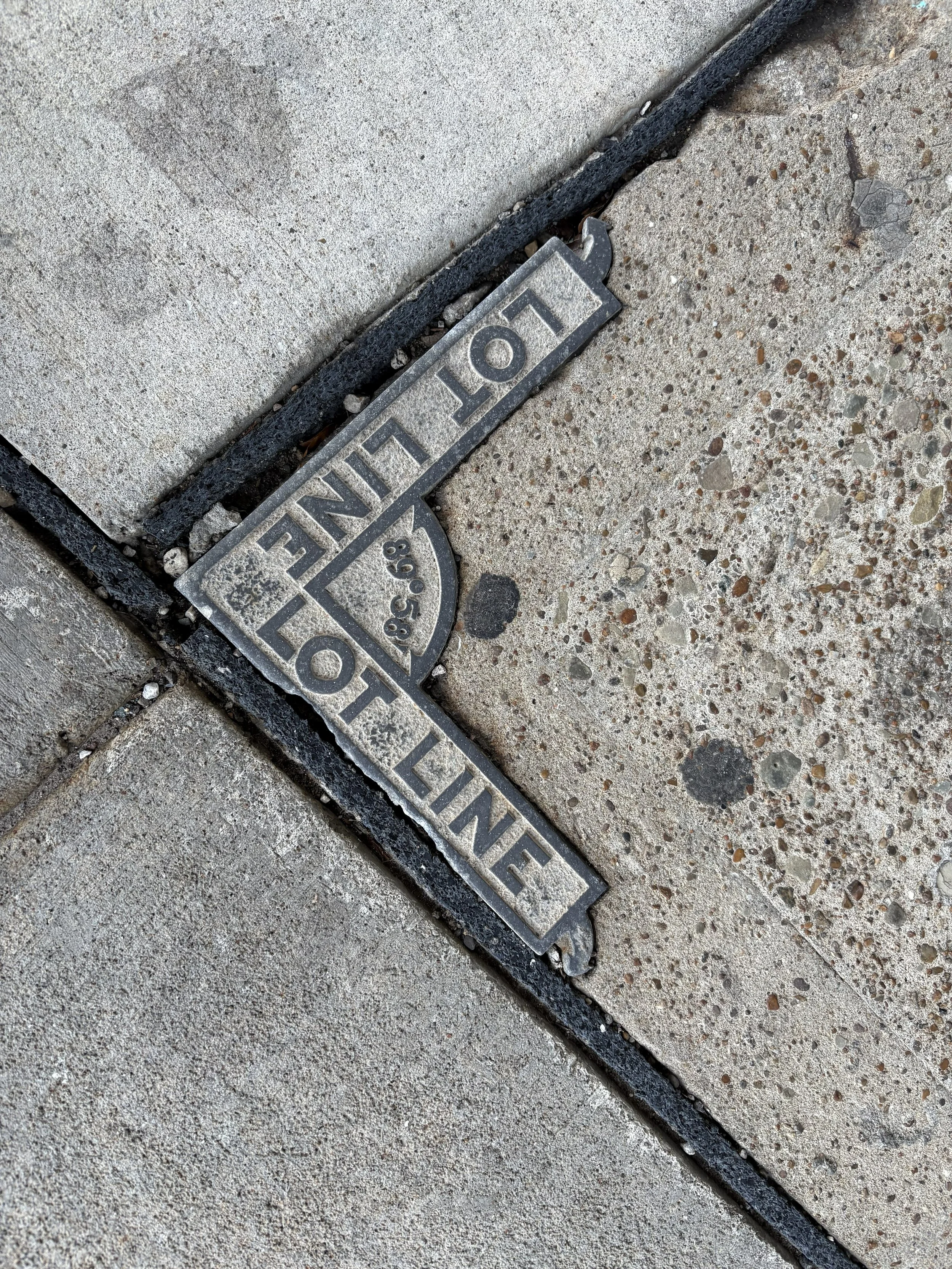
Before Erie’s stories were digitized, they were etched—by hand, by boot, by brass. Sidewalk stamps and embedded plaques dot our city like quiet signatures, marking the names of long-gone contractors, forgotten civic pride, and cryptic commemorations. These modest markers are more than decorative—they’re time capsules, cast into the very bones of our streets. Some date back a century, others whisper of mid-century optimism or industrial grit. All of them ask the same thing: Did you notice me?
Below, you’ll find a slideshow of Erie’s sidewalk stamps and plaques. Click the arrow to the right of the photo viewer to step through each one—and see what’s been hiding in plain sight.
Ornate Finishes
The Fancy Bits: Erie’s Ornate Echoes
Look up. Look closer. Erie’s buildings wear their history in scrollwork and stone—flourishes tucked into cornices, keystones, and iron grates. These antique architectural details are more than decoration; they’re the city’s quiet declarations of pride, craftsmanship, and forgotten grandeur. Some are weathered, some still gleam, but all of them whisper of eras when even a doorway deserved poetry. This section showcases the embellishments that survive in plain sight—proof that Erie’s weirdness isn’t just in its stories, but in its very bones.